
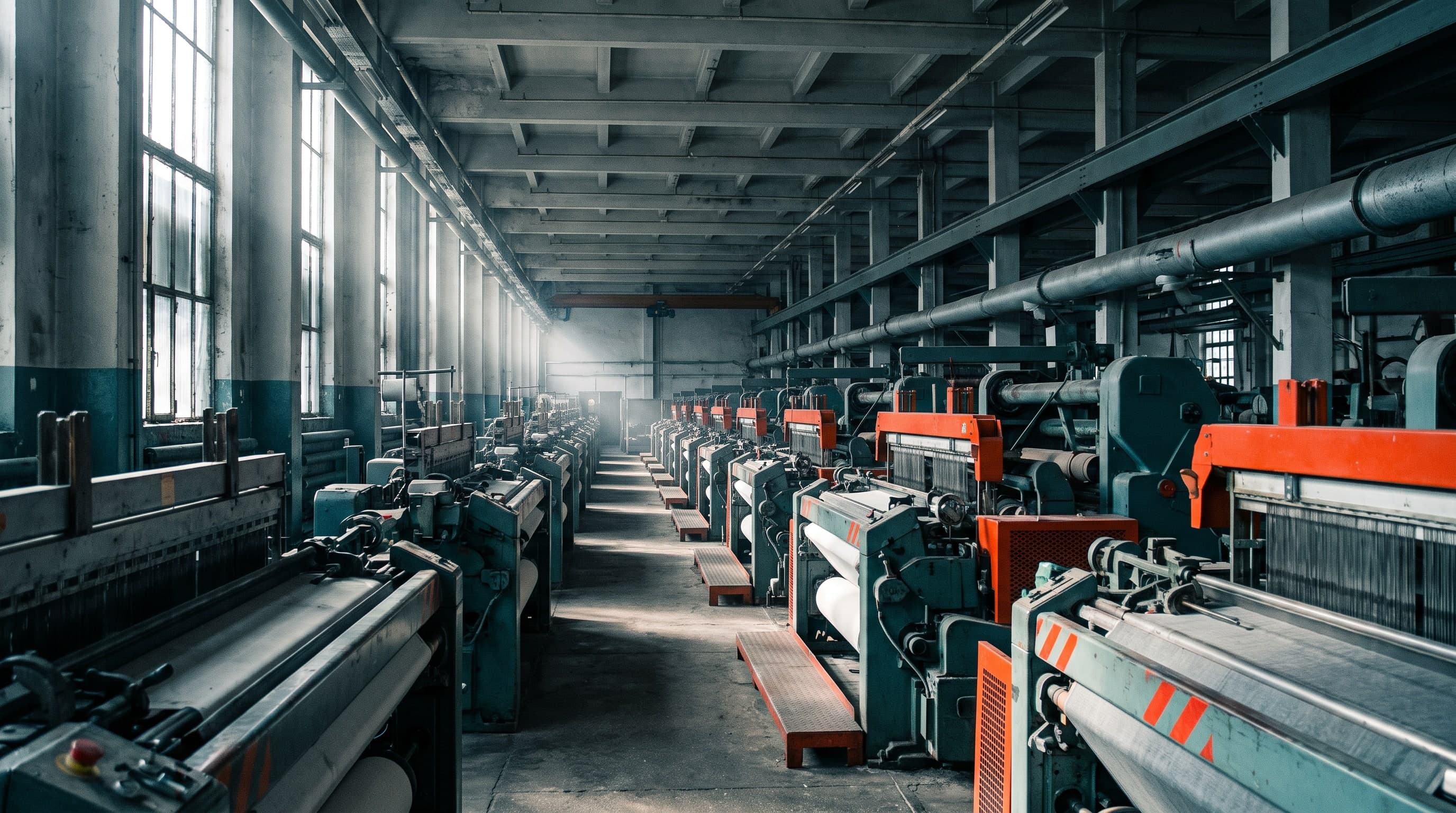
Machines bought the way an engineer buys.
Technical Textile Machinery — new, used and rebuilt lines, assessed against your fabric and your process before anybody talks about the asking price.
A line is not a data sheet.
Two machines with the same model number can be worlds apart. What matters is the three things the seller rarely puts in the listing — and those are the three we check first.
Width & working width
The number that decides your waste — checked against your article, not against the brochure.
Control generation
Spare parts and service availability stand or fall with the control. We ask before you buy.
Condition & hours
Run hours, last overhaul, wear parts — and what it costs to bring the line back to production quality.
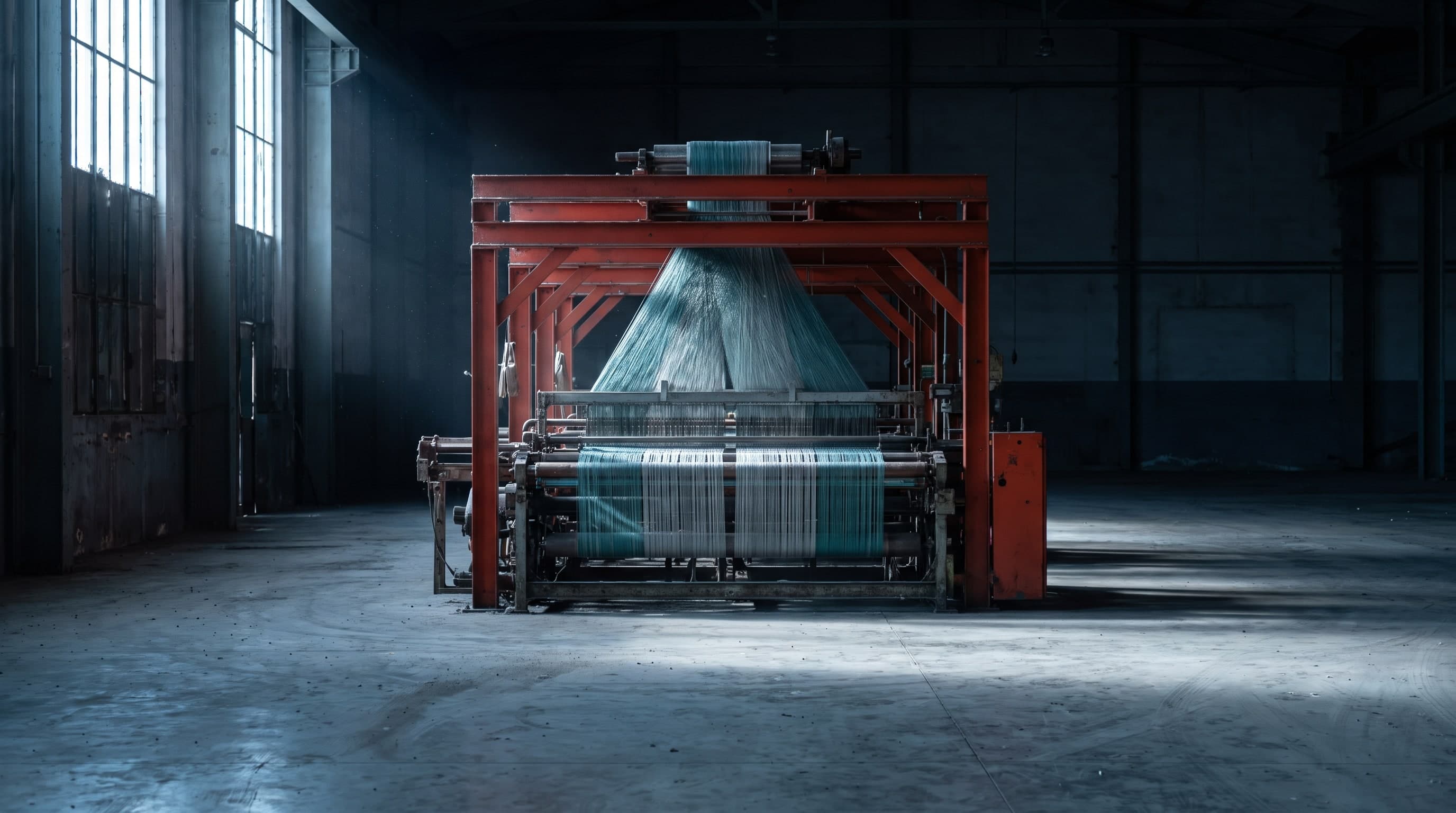
Illustrative image of an industrial weaving machine — generated for this website, not a photograph of a TT-BC machine.
Six line types, one contact.
Weaving
Rapier, air-jet and projectile looms for heavy and technical constructions, including wide widths and high warp tension.
Base cloth, PPE fabrics, composites, filtration
Narrow fabrics
Needle looms and braiders for webbing, tapes and sleeving, with the take-up and edge control the safety segment needs.
Lifting, restraint, cable protection
Coating & laminating
Knife-over-roll, transfer and dip lines, calenders, flame and adhesive lamination with the drying capacity to match.
Tarpaulin, belting, membranes, protection
Nonwoven lines
Carding, cross-lapping and needle-punch lines, thermobonding and finishing sections for felts and media.
Filtration, geotextiles, insulation
Winding, slitting & inspection
Rewinders, slitters and inspection tables — the quiet end of the hall that decides how your roll arrives.
Converting and finishing
Testing equipment
Tensile, abrasion, hydrostatic head, flame and permeability testing — the equipment that turns a claim into a report.
Quality and approvals
Three details, three decisions.
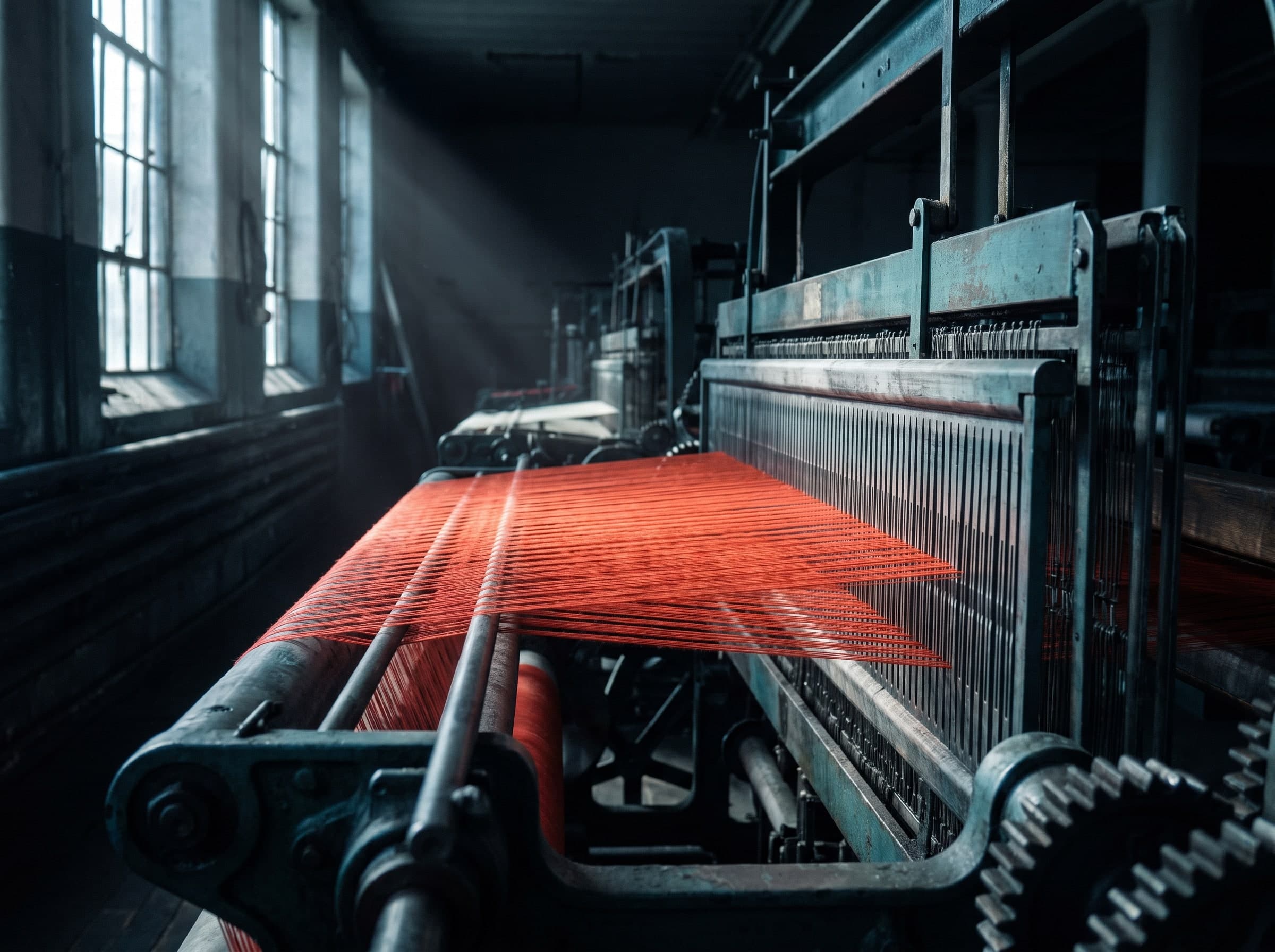
The reed and the warp sheet
Density, dent width and tension tell you within a minute whether a loom can hold your construction.
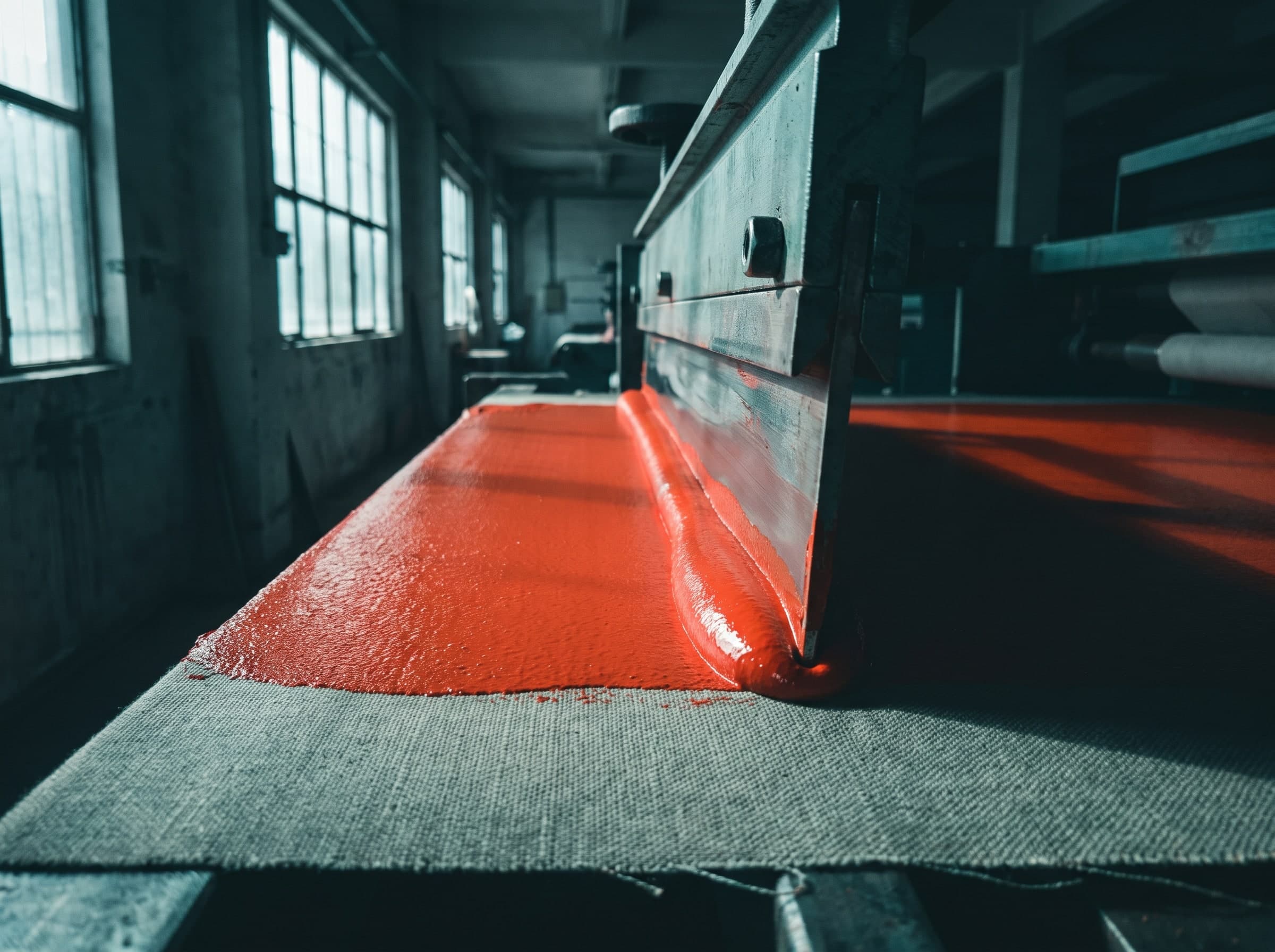
The doctor blade
Blade geometry and bead behaviour decide the add-on tolerance — the single biggest cost lever on a coating line.
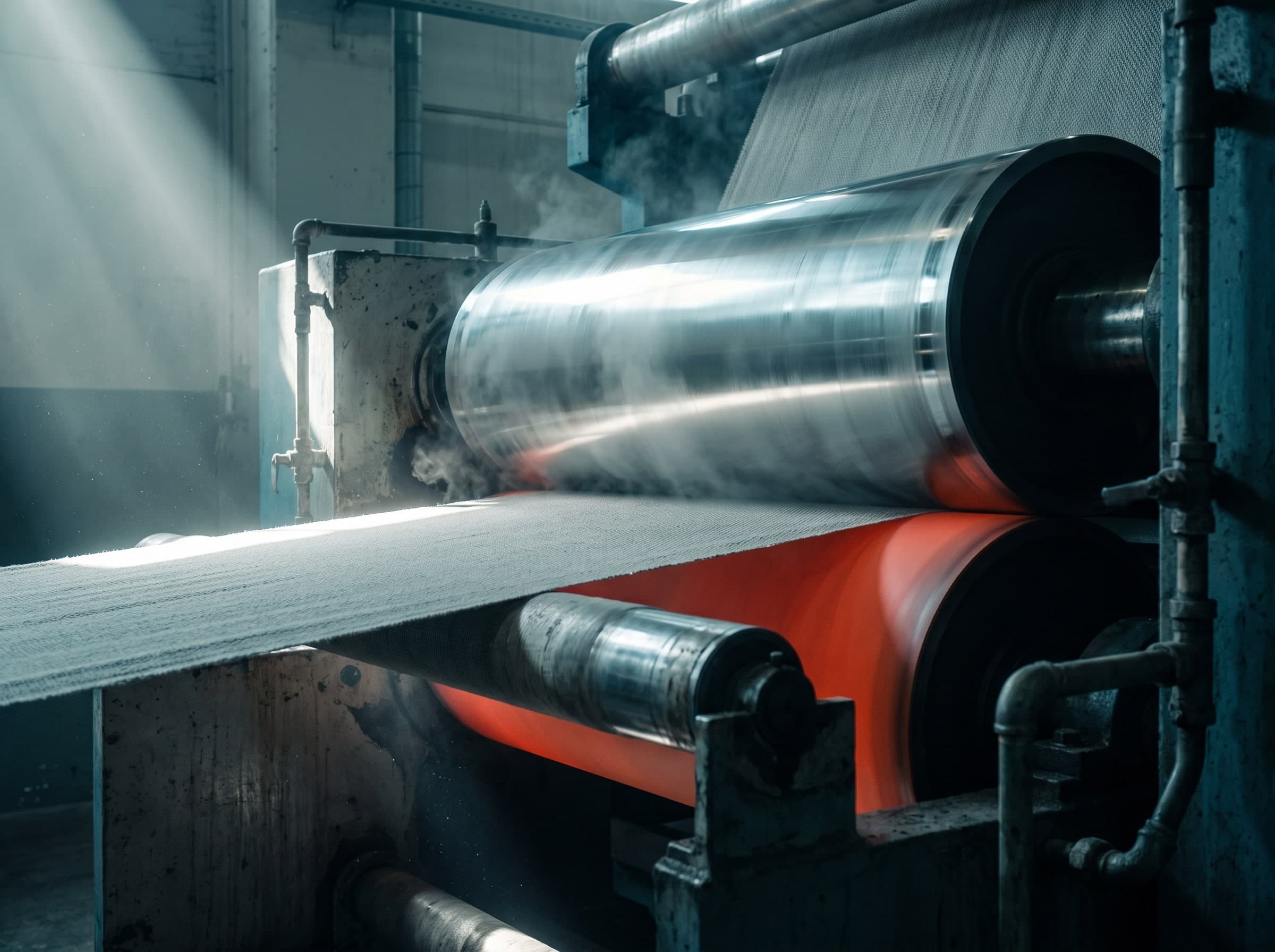
The calender nip
Roller surface, temperature profile and nip pressure define what the finished hand and the seal quality can be.
Illustrative close-ups of the machine details described — not photographs of machines inspected by TT-BC.
Six questions before you sign.
A used line can be the best investment in the hall — or the most expensive room decoration.
- 01
Does the working width fit your article — or are you paying for waste?
- 02
Which control generation, and are spare parts still available?
- 03
Run hours, last overhaul, wear-part condition.
- 04
Was it running when you saw it, and on what fabric?
- 05
Dismantling, transport, foundations, power and media on site.
- 06
Commissioning, training and who is liable for the first good metre.
Tell us the fabric. We will tell you the machine.
Construction, width, output and the quality you have to hold — that is enough for a first assessment of what kind of line you need and whether new, used or rebuilt is the honest answer. If the fabric itself is still open, start at the material catalogue; if you would rather buy the cloth than the line, that is the trade side.
- Spare parts and retrofit sourcing
- Dismantling and relocation
- Commissioning and operator training
- Pre-purchase technical inspection